Ask a polyester ribbon supplier to state whether the quoted supply may contain splices or joins, how any such interruptions would be identified and whether the required uninterrupted run can be confirmed. Keep those answers separate from roll count and total length. A roll photograph or a catalogue material name does not establish continuous, splice-free supply. Unanswered questions should remain open before the buyer accepts the relevant order scope.
Two quotations can describe the same total ribbon length yet leave a different practical question unresolved: can the buyer obtain the uninterrupted run needed for the intended task? This matters when an interruption would affect a planned piece or visible section. The enquiry should explain that requirement clearly without claiming that every supplier offers a particular joining method or guarantees a joint-free roll.
Identify the ribbon and the intended use
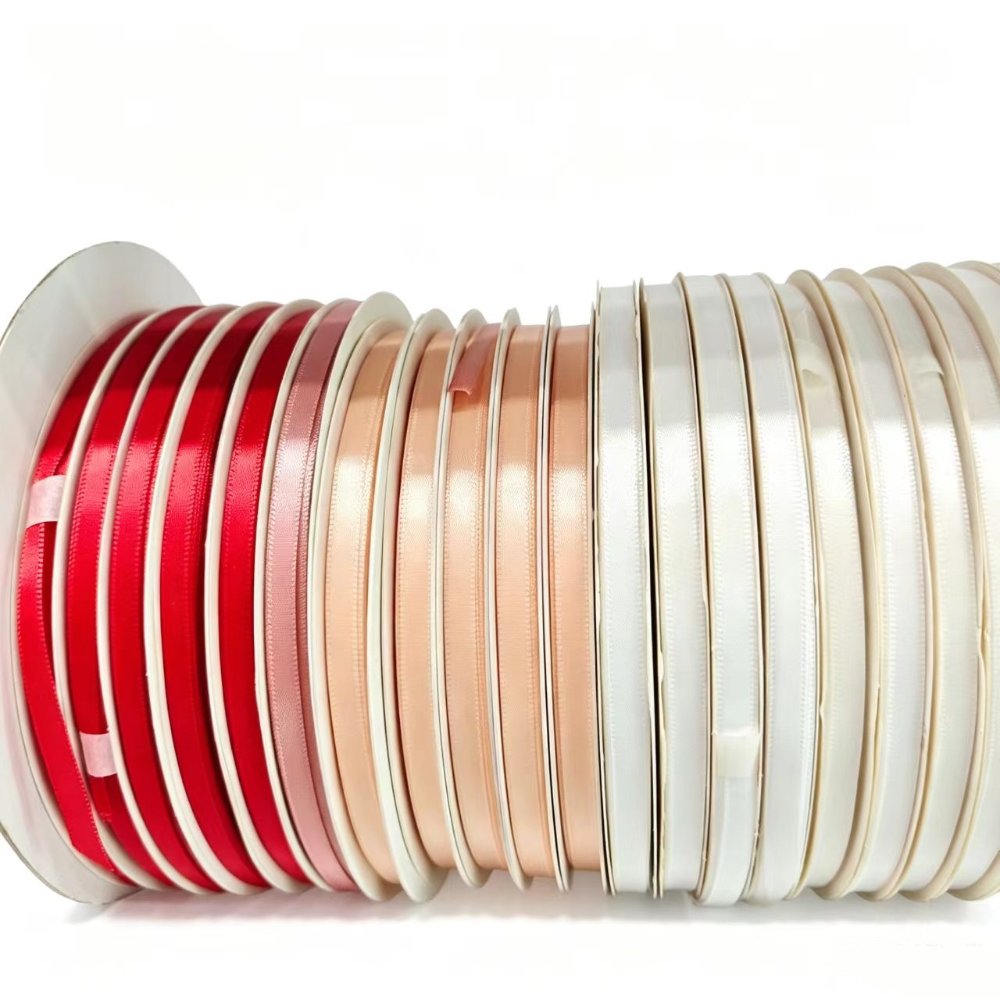
The En Hong catalogue reference for this discussion is the product named Polyester Ribbon. Its historical official photograph shows rolls in several colours. Use that name, the product link and the supplier’s confirmed variant to identify the enquiry. The catalogue reference does not independently verify fibre composition, manufacturing conditions or the presence or absence of joins inside a particular roll.
Product reference:
https://ehribbon.com/product/polyester-ribbon/
Describe the use that makes an interruption relevant. A buyer may need an uninterrupted visible section or material for a planned piece, but the actual requirement must come from that buyer’s application. Ask the supplier what can be confirmed against it. Do not invent a usable-length value, permissible join count or tolerance just to complete an otherwise empty enquiry field.
Distinguish quantity from continuity
Roll count, length per roll and total linear quantity describe commercial quantities. They do not automatically answer whether a particular length is uninterrupted. Keep a separate continuity question beside the selected product and order reference. This makes it possible to obtain a useful response without changing the meaning of the quantity statement.
For example, a supplier might confirm the proposed quantity but leave join information unanswered. Record those as separate decisions. Quantity confirmation should not silently approve interruptions, and a comment about joins should not be treated as a corrected length statement. Ask a focused follow-up where the two subjects have been combined in one vague answer.
Use clear terms for the supplier’s response
Ask the supplier what it means by a splice or join for the quoted product. A buyer and supplier may use the same word for different conditions, or different words for the same interruption. Request a description or marked reference where terminology is unclear. The article does not prescribe a joining process or assume that any particular condition occurs in the supplier’s goods.
Keep the supplier’s original wording with any buyer summary. If the supplier says a condition may occur, do not rewrite that statement as a guarantee that it will occur only in a particular place. If the supplier says no joins are proposed, ask which selected supply and order scope that answer covers. A general catalogue statement and an order-specific answer should remain distinguishable.
A continuity enquiry record
Question area | Buyer input | Supplier response to request | Decision record
Product identity | Exact catalogue reference and quoted variant | Confirm the selected supply | Keep with the quotation reference
Interruption scope | Explain why uninterrupted material is needed | State whether joins or splices may be present | Accept, clarify or leave open
Identification | Describe what the receiving team needs to recognise | Explain any proposed identification method | Record the agreed reference
Usable run | State the actual application requirement | Confirm what can be supplied against it | Retain any qualification
Unresolved conditions | List questions not yet answered | Respond to each specific question | Do not fill gaps by assumption
These are enquiry fields, not evidence that a supplier has accepted a particular requirement. The record becomes useful when each answer is connected to the quoted product and the buyer’s actual application rather than copied from an unrelated ribbon order.
Ask how a declared interruption would be recognised
If the supplier declares a join or splice condition, ask how the buyer would identify it in the supplied material. Request a suitable explanation or reference photograph where needed. Do not assume that a marker, flag or separate label will be supplied. Identification is itself a scope question that the supplier should answer for the selected order.
Keep any proposed marking method distinct from ordinary roll identification. A roll label may link material to an order line without identifying an internal interruption. Conversely, a visible marker might need an explanation before the receiving team knows what it signifies. Ask about the relationship between the declared condition and the proposed identification rather than treating the existence of a label as a complete answer.
Review evidence without inventing a performance result
A supplier photograph or explanatory sample may help clarify what a declared join looks like. Record the question that evidence answers. A visual example does not establish join strength, suitability for every application or an untested performance outcome. If the buyer needs further evidence, describe that requirement separately and ask what information is available.
Avoid turning the purchasing discussion into unsupported process advice. The supplier should identify the construction or treatment it proposes for its product. The buyer’s task is to decide whether the declared supply matches the intended use and agreed evidence. It is not to infer manufacturing methods from a photograph or specify an unverified technical solution.
Carry the decision into the order record
Before accepting the relevant order scope, compare the supplier’s continuity answer with the buyer’s stated requirement. Identify any qualification that affects the planned use. If an answer changes, retain the earlier response and record what the revised proposal now covers. Do not silently replace a qualified statement with a shorter, more confident description.
Provide the receiving team with the accepted reference and any open conditions. If material later appears inconsistent, the team can describe the specific interruption and the supplier statement being questioned. This creates a more useful enquiry than simply reporting that a roll looks different while leaving the original agreement unclear.
Frequently asked questions
Does a stated roll length mean the material is uninterrupted?
Do not assume that it does. Ask a separate question about joins or splices and the actual uninterrupted-run requirement. Retain the supplier’s response against the selected product and quotation scope.
Does the catalogue photograph prove there are no joins?
No. The selected photograph identifies the ribbon’s catalogue presentation. It does not show all material inside a roll or establish the condition of every supplied length. Request order-specific confirmation where continuity matters.
Should the buyer prescribe a joining method?
Do not invent one from the available catalogue evidence. Ask the supplier to describe any proposed condition and relevant evidence. Keep technical requirements or additional verification needs explicit rather than presenting an unconfirmed process as established practice.
What if the supplier cannot confirm the required uninterrupted run?
Record that limitation and keep the affected decision open. The buyer can then assess the proposal against the intended application. Do not convert an unanswered or qualified response into a continuous-supply promise.
Send a focused supplier enquiry
Give En Hong the exact ribbon reference, explain why continuity matters and request separate answers about presence, identification and the required usable run. Keep quantity information available, but do not let it stand in for those answers. Use the contact page to discuss the selected supply.
Contact:
https://ehribbon.com/contact/
Blog:
https://ehribbon.com/blog/