
Start a glitter ribbon cutting enquiry by asking whether the supplier can provide the requested cut-piece format for the exact selected ribbon. If that scope is available, request a description of the proposed end shape and finish, together with a representative close-view or sample reference. Do not assume pre-cut supply, a sealing process or anti-fraying performance from a catalogue photograph of rolls. Keep unanswered service and construction questions open.
A buyer may show a finished decoration and ask for ribbon ready to use, while the supplier’s quotation still describes rolled material. Even after the supply format is clarified, the meaning of a finished end can remain uncertain. A focused enquiry separates the commercial service question from the appearance and evidence needed to approve the proposed cut end.
Identify the exact glitter ribbon
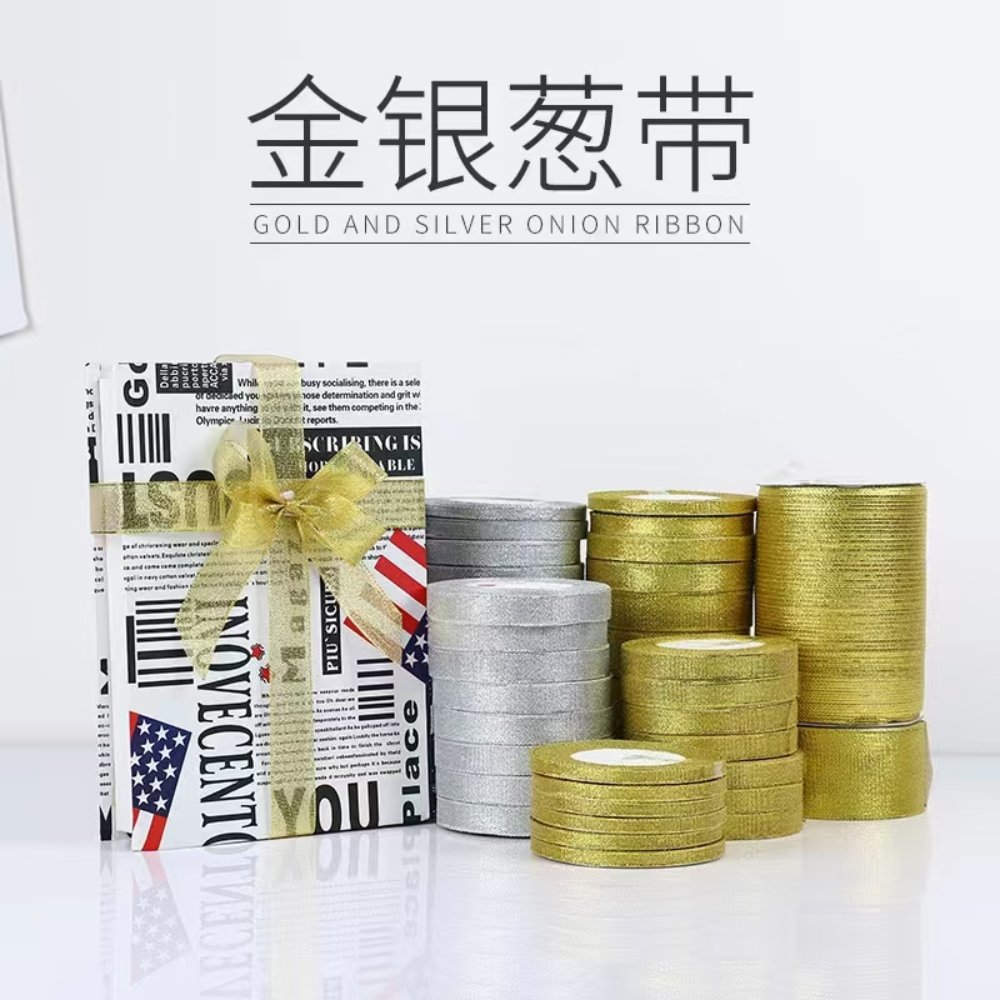
The En Hong catalogue reference used here is Gold & Silver Glitter Ribbon. Its historical official image shows ribbon rolls beside a wrapped gift. Use the product name and link to identify the intended catalogue item, then ask the supplier to confirm the quoted variant. The gold and silver wording identifies the catalogue description; it does not establish precious-metal content or a verified material composition.
Product reference:
https://ehribbon.com/product/gold-amp-silver-glitter-ribbon/
The selected photograph is a design and product reference. It does not show an agreed cut end, establish the condition of every edge or prove that a cutting service is offered. A gift in the scene is a styling reference, not evidence that finished decorations, accessories or assembly work form part of the supply.
Ask about the supplied format before the end finish
State whether the buyer is asking for rolled material or a proposed cut-piece supply. If cut pieces are requested, ask the supplier whether that format can be quoted for the selected ribbon. Do not write the request as an existing capability. A clear supplier answer may confirm availability, describe a qualified proposal or explain that the request cannot be met.
Keep that service answer beside the quotation reference. A discussion of an attractive end shape does not by itself establish that the supplier will deliver cut pieces. Likewise, confirmation of a cut-piece format does not automatically approve its end treatment. Separate these decisions so each question can be answered without relying on an ambiguous phrase such as ready to use.
Describe the requested appearance without inventing a process
Explain what the buyer wants the end to look like using an annotated drawing or suitable reference, if one is available. Ask the supplier to describe the end shape and finish it proposes. The purpose is to establish a shared description of the delivered piece, not to specify equipment or a manufacturing method that the available evidence does not support.
If the supplier uses a technical term, request an explanation of what that term means for the selected ribbon. Do not assume that a word such as sealed describes a particular process or guarantees a particular result. Keep the supplier’s proposed construction and any performance claim separate, with the relevant scope and evidence identified.
A cut-end enquiry table
Question area | Buyer request | Supplier answer to record | Evidence needed for a decision
Supply format | State the requested rolled or cut-piece scope | Confirm whether the proposed format can be supplied | Quotation scope for the exact ribbon
End appearance | Identify the requested shape or visible finish | Describe the proposed delivered end | Marked reference or representative close-view
Treatment description | Ask what any supplier term means | Identify the proposed treatment, if applicable | Supplier’s explanation for the selected material
Approval reference | Identify what the buyer will review | State what sample or view can be provided | Agreed reference and open limitations
Unresolved conditions | Keep unanswered questions visible | Confirm or qualify the proposal | Buyer decision before accepting the scope
The table contains questions rather than a statement that every listed service or treatment is available. Do not add a cutting tolerance, piece length or finish requirement without an actual buyer basis and supplier response. This article provides no such specification.
Request evidence of the proposed end
Where the supplier proposes a cut-piece format, ask for evidence that addresses the end itself. A normal roll photograph may identify the catalogue product but leave the relevant area unseen. Request an appropriate close-view or sample reference rather than declaring that the retained photograph already proves the end condition.
Record which ribbon and proposed treatment the evidence represents. Ask the supplier to identify the orientation of the view and any limitation that affects interpretation. If the image does not show enough detail to answer the buyer’s question, describe the missing information. An unclear picture should remain an open item rather than becoming an accepted specification by default.
Keep appearance and performance decisions separate
An acceptable-looking example does not independently prove resistance to fraying, shedding or wear. Do not turn a visual approval into a claim that those outcomes have been tested. If the buyer needs additional evidence, describe the required question separately and ask the supplier what information is available for the proposed supply.
The same caution applies to methods. No cutting temperature, machine setting, tool choice or heat-sealing instruction is established by the retained catalogue material. Ask the supplier to explain its own proposal where relevant. Do not infer a process from the glitter appearance or treat a buyer’s preferred method as an existing factory capability.
Make the quotation and approval record agree
Before accepting the relevant scope, check whether the quotation, supplier explanation and proposed end reference describe the same item. If the supplier offers rolled supply only, the cut-piece request remains unresolved even when the catalogue photograph appears suitable for the buyer’s application. If a different ribbon is proposed, identify that change explicitly before using evidence from it.
Keep accepted points and open conditions in separate fields. Retain the supplier’s wording with the buyer’s decision rather than replacing a qualified response with a shorter statement that sounds final. This helps another colleague understand which service, appearance and evidence were actually discussed.
Use the record when a sample arrives
Compare a supplied sample with the agreed reference for the specific end question. Record what can be observed and what still needs explanation. Avoid extrapolating from one example to every piece or making a performance declaration that the review did not establish.
If the sample appears inconsistent, identify the exact difference and ask the supplier about it. Keep the earlier reference available so the discussion remains traceable. This is more useful than changing the record after the fact or assuming that an unfamiliar end condition represents the treatment originally proposed.
Frequently asked questions
Does a ribbon roll photograph establish pre-cut supply?
No. Ask whether the supplier can quote the requested cut-piece format for the exact selected ribbon. The catalogue image identifies a product presentation, not an included cutting or finishing service.
Can we require a sealed end without further explanation?
Describe the buyer’s actual requirement and ask what the supplier proposes. Clarify any term used in the response. Do not assume that one word identifies a process, proves a result or establishes a service that has not been confirmed.
Does a neat-looking end prove anti-fraying performance?
No. Visual appearance and an untested performance outcome are different matters. Keep any further evidence requirement explicit instead of treating a catalogue picture or sample photograph as an independent test result.
What if only rolled material is available?
Record that answer and assess it against the intended purchasing requirement. Do not describe the cut-piece request as accepted or claim that the supplier provides a service outside the confirmed quotation scope.
Send a precise cutting enquiry
Give En Hong the product reference and requested supply format, then ask for a proposed end description and suitable approval evidence if that format is available. Identify the questions still awaiting confirmation. Keep material, performance and process assumptions outside the accepted scope.
Contact:
https://ehribbon.com/contact/
Blog:
https://ehribbon.com/blog/