
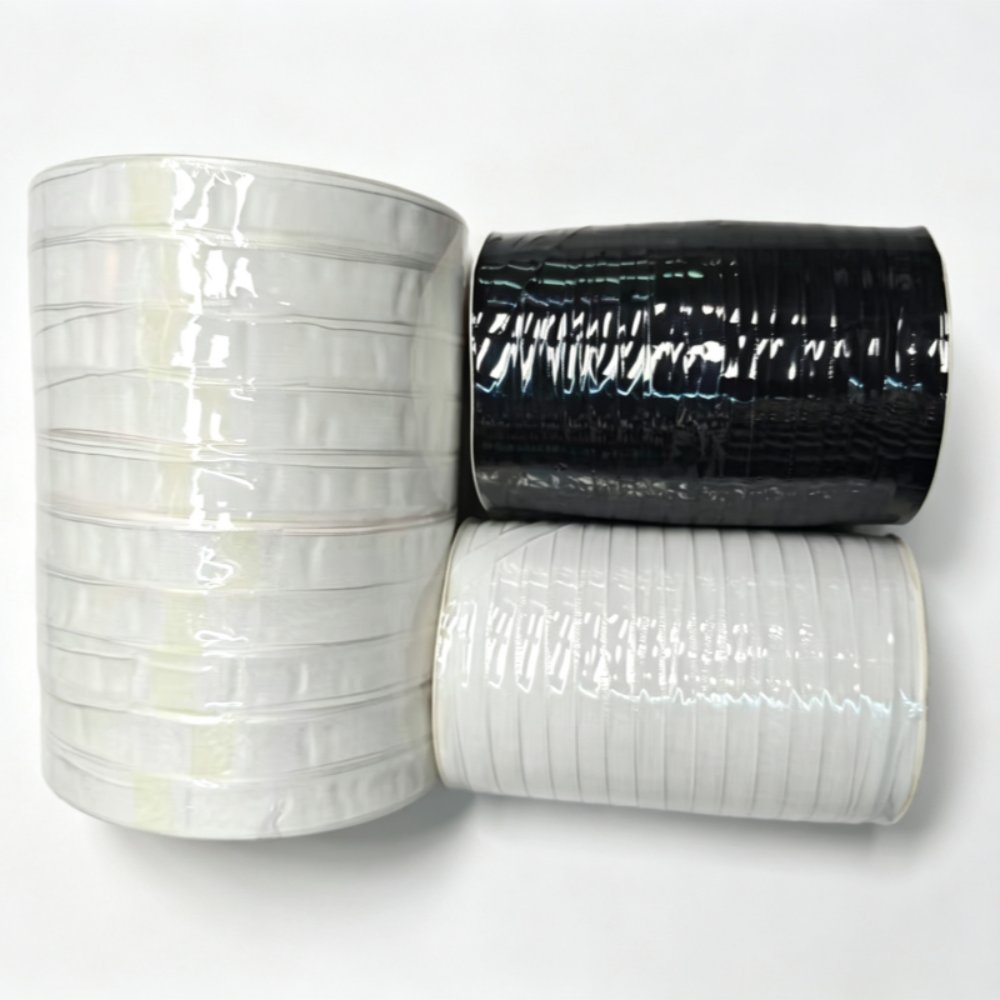
Before approving organza care copy, identify whether the source instruction covers the exact loose ribbon or a complete decorated item. Retain the product version, supplier basis and any qualification, then bind the approved wording to its artwork or retail-copy revision. A ribbon photograph or an edge-family name does not establish a washing method or extend evidence to an assembled product.
Identify what the instruction is supposed to cover
Enhong lists thick-edge, thin-edge and satin-edge organza ribbon as separate catalogue references. A buyer of wholesale organza ribbon should identify the actual offered version when requesting care information. Do not assume that one instruction applies across those references because their bodies look similarly transparent in photographs or because the same colour is requested.
State whether the question concerns loose ribbon, a prepared bow or another decorated article. That distinction is part of the evidence scope. An instruction applicable to a ribbon component does not automatically cover every adjoining material or assembly process. The person responsible for the complete item needs to establish which further information or review is required.
Ask for a source before drafting customer-facing treatment advice
Request the supplier’s actual instruction for the named ribbon version, with an attributable document or written response. Ask which qualifications belong with it. If only a material description or a general product paragraph is supplied, keep the treatment instruction unresolved. Do not fill the gap with a familiar wash temperature, drying setting or cleaning method from a different product.
The reviewed photographs identify catalogue options and their visible presentation. They do not demonstrate how a ribbon responds to cleaning, heat or handling. Likewise, the current thick-edge page’s descriptive claims do not become an independently verified care result simply because they are published. Keep each statement described according to the evidence actually available.
Use an applicability and copy-control table
Keep original source wording separate from a proposed paraphrase. This makes an omitted condition or added claim visible. If the supplier’s answer is unclear about a finished decoration, ask for clarification of that boundary instead of treating a short sentence as permission to describe the entire item as washable or suitable for a particular cleaning process.
Control field | Record to request or retain | Boundary
Supplied item | Exact ribbon version and source reference | Not another edge option or an unnamed assembly
Instruction basis | Attributable source and qualification | No treatment inferred from a photograph
Covered scope | Loose component or identified complete item | Do not extend component evidence automatically
Approved wording | Exact text, language and dated decision | No added performance or universal-care promise
Reproduction | Artwork or retail-copy revision and location | Digital comparison is not a physical treatment test
Review assemblies without widening a component statement
For a ribbon intended to remain attached to another article, identify the actual adjoining materials and proposed arrangement for the responsible reviewer. Do not claim that a component instruction validates the complete assembly. A visual bow approval can show the accepted appearance, while leaving the treatment question open. Keep those decisions in separate fields so one does not silently replace the other.
If the buyer needs an applicable test or evaluation for the complete item, record that requirement separately with the version and conditions to be addressed. This article supplies no universal test method or guaranteed outcome. The correct record can say that a component source has been received while assembly-level evidence remains unavailable.
Control the exact text reproduced on the output
Once the wording and coverage have been reviewed, request the artwork or retail text that will reproduce the instruction. Compare it with the dated master, including every relevant qualification and language version. A layout change can remove a word or separate a condition from the sentence it limits. Record the actual comparison rather than assuming that a familiar-looking proof is unchanged.
Keep digital artwork review separate from a physical label or delivered-item observation. An approved file does not establish that it has been printed, attached or supplied correctly. If the same care wording is used in an online listing, identify that copy location and its owner. The intended handoff should make it possible to trace the current wording back to the actual source.
Reopen applicability when the relevant item changes
Use the product enquiry and contact links below to send the scope questions. Keeping a missing instruction visibly unresolved is more useful than publishing confident generic advice. The resulting record can support purchasing and copy preparation without inventing cleaning suitability, durability or a result that has not been established for the actual item.
• Request product-specific source instructions for the exact organza reference.
• State whether loose ribbon or a complete decorated item is the intended scope.
• Preserve source qualifications and compare every proposed output with the approved wording master.
• Ask for renewed applicability confirmation when the ribbon version, assembly or supporting instruction changes.
Frequently asked questions
Can one organza care statement cover every edge family?
Only if its source explicitly covers those actual versions. Do not infer that coverage from a shared category or similar appearance.
Does a ribbon instruction approve a complete decorated item?
Not automatically. Identify the covered component and ask the responsible party what additional assembly-level evidence is needed.
Should a missing instruction be replaced by general advice?
No. Request the actual product-specific basis and keep the unresolved field visible until a suitable response is reviewed.
Does a copy comparison establish treatment performance?
No. It checks the text and its stated scope. A performance result or physical-item evaluation requires separate applicable evidence.
Product and contact references
https://ehribbon.com/product/thick-edge-organza-ribbon/
https://ehribbon.com/product/satin-edge-organza-ribbon/
https://ehribbon.com/contact/
https://ehribbon.com/blog/