
Organza Width Records: Define the Measuring Span
An organza ribbon width record should identify the physical sample and mark exactly where a measurement starts and ends. State whether the requested figure covers the entire ribbon or a separately defined central body or border. Agree the sample presentation and recording method before comparing results. A thin-edge or satin-edge catalogue name is not a numerical width definition.
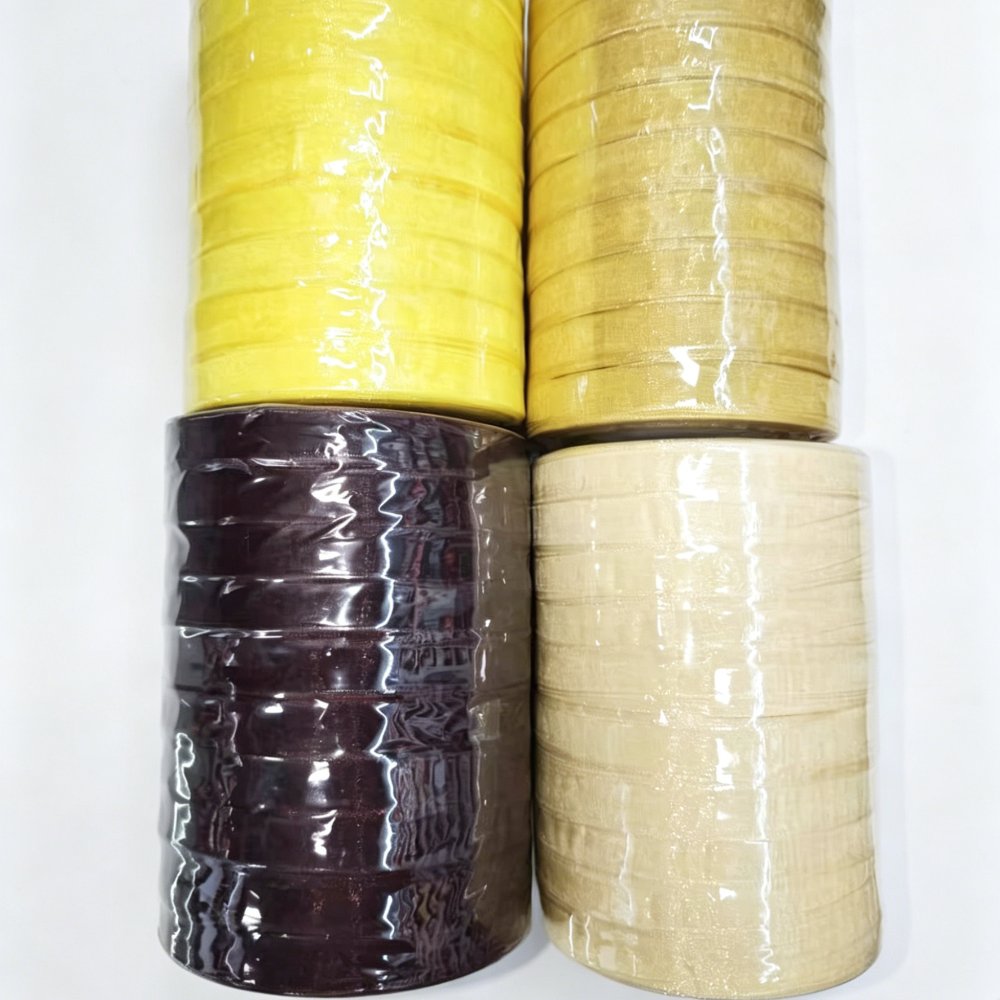
Enhong has Thin Edge Organza Ribbon, Thick Edge Organza Ribbon and Satin Edge Organza Ribbon catalogue references. Their photographs show different presentations, with much of the ribbon wound or wrapped. They help identify a requested sample but do not show a controlled width measurement. Procurement needs a repeatable record that another reviewer can understand without interpreting the product name differently.
Identify the physical sample before marking endpoints
Record the product reference and the supplier identifier attached to the actual sample. Retain any colour or version information needed to distinguish it from another swatch. If a buyer only has a catalogue image, mark the physical measurement as not yet observed. Do not copy a figure from a visually similar roll into the sample record to make the form appear complete.
Identify which portion of the sample is being reviewed and keep a photograph or drawing that relates to it. A wrapped stack is not the same presentation as an accessible loose strip. Ask for an appropriate sample where the relevant boundaries can be seen. The catalogue views here do not establish the state of that future sample, its measured dimensions or the instrument used.
Separate the overall span from narrower fields
Draw or mark the two endpoints for an overall width field. If the buyer also needs a central-body figure, give that field its own endpoints and name. A request for the ribbon width should not silently change into a request for only the transparent-looking portion. Conversely, a body-width request should not be answered with a full edge-to-edge value without explaining the difference.
Where a border field is needed, identify which side it concerns and which visible or construction boundary the parties mean. If that boundary is unclear, retain the question instead of selecting a convenient line from a photograph. The purpose is to define the requested measurement, not to infer the thickness, wire content, fibre identity or technical construction of a named edge family.
• Bind every reading to an identified physical sample.
• Mark endpoints for overall, central-body and border fields separately.
• Keep observed values distinct from acceptance requirements.
Agree the presentation used for the observation
Describe how the sample will be positioned and identify the chosen measuring method with the supplier or reviewer. If handling or presentation may change the reading, record the relevant conditions rather than assuming every ribbon behaves the same way. No loading value or prescribed stretch procedure is supplied here. The parties need an appropriate method for their actual purchasing requirement.
Keep the unit, instrument identification and observation location with each recorded result. If observations are taken at more than one location, retain the individual entries before summarising them. Do not choose the most attractive reading and present it as the entire sample. A proposed tolerance or acceptance rule belongs in an agreed requirement; it should not be invented after seeing the observations.
Record field | What must be defined | What the catalogue does not establish
Overall width | Two outer measuring endpoints | An observed dimension
Central body | Separate inner endpoints if requested | An automatic substitute for overall width
Border field | Named side and intended boundary | Thickness or construction from an edge name
Observation | Sample, unit, method and location | A universal tolerance or performance result
Use disagreements to clarify the method before approval
When two records disagree, first compare their sample identity, endpoint drawing and presentation. One reviewer may have recorded the complete ribbon while another recorded a central section. Resolve that scope mismatch before describing either result as a product defect. Preserve both original records so the explanation remains traceable rather than overwriting the inconvenient number.
The final file should distinguish the requested definition, the observed figures and the acceptance decision. Link that decision to the identified sample and method revision. A different edge version or changed endpoint definition may need a new record. Width observations do not establish fraying, tensile behaviour, colourfastness or suitability for every decoration; those are separate questions requiring their own applicable evidence.
Frequently Asked Questions
Does thin edge specify a border width?
No number should be inferred from the name. Define the needed endpoints and obtain applicable confirmation or observation.
Can the roll photograph be measured as a physical sample?
No. The published image is an identification reference, not a controlled dimensional record.
Should repeated readings be reduced to one number immediately?
Retain the individual observations and their locations. Use an agreed summary and acceptance rule where needed.
Does a width record approve the finished decorative appearance?
It answers a dimensional definition and observation question. Appearance in a bow or other assembly remains a separate review.
Identify the requested thin-edge organza option or satin-edge reference. Read the ribbon blog and contact Enhong with an endpoint sketch and the sample information still required.
thin-edge organza option: https://ehribbon.com/product/thin-edge-organza-ribbon/
satin-edge reference: https://ehribbon.com/product/satin-edge-organza-ribbon/
ribbon blog: https://ehribbon.com/blog/
contact Enhong: https://ehribbon.com/contact/