
Polyester Ribbon RFQs: Separate Rolls and Length
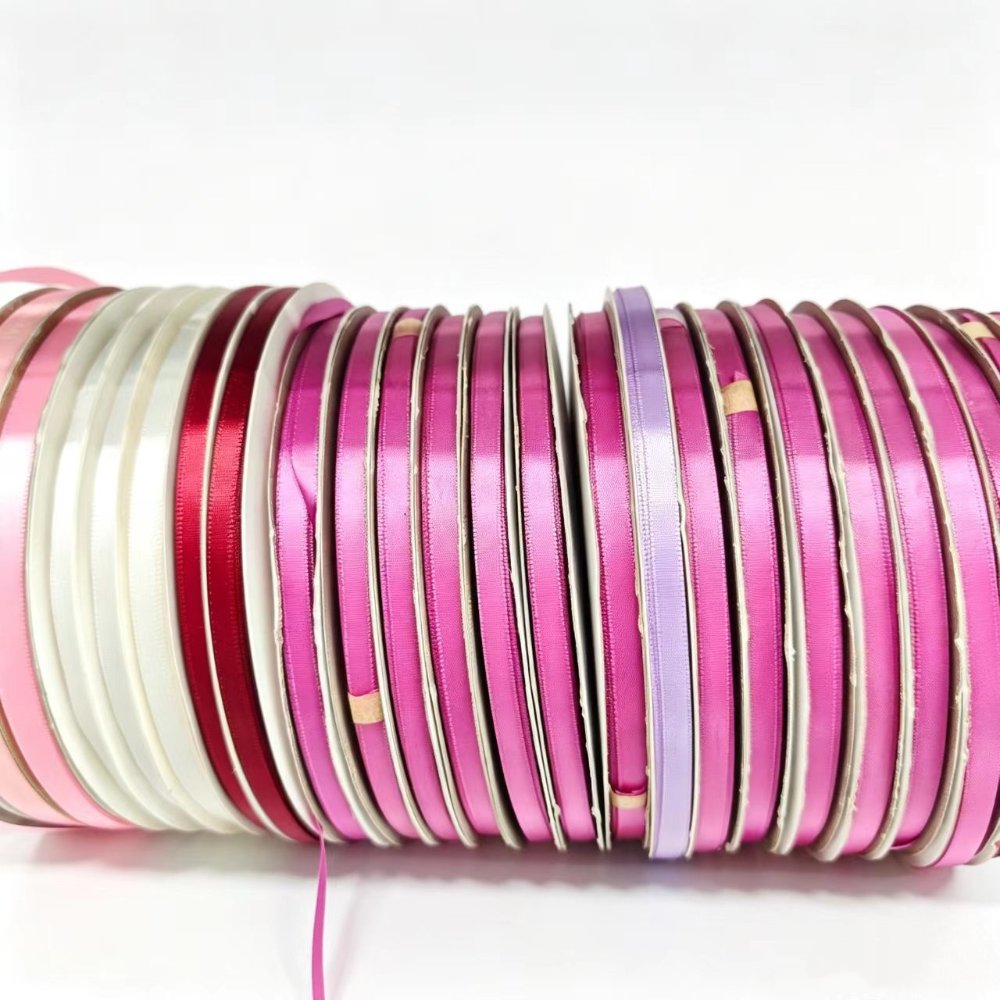
For a polyester ribbon RFQ, state the requested roll count and linear quantity separately, with the unit written beside every length. Ask the supplier to confirm the offered length per roll, any qualification about continuity and the quantity assigned to each colour and width line. A photograph of wound ribbon cannot establish how much ribbon is supplied or which quantity a quoted price covers.
Enhong lists Double-sided Polyester Ribbon, Polyester Ribbon and Gold Edge Polyester Ribbon separately. Its catalogue includes wound rolls as well as a flat bordered reference. These images identify options for an enquiry; they are not a measured inventory. An importer comparing offers needs a quantity sheet that remains clear when one supplier replies in rolls and another describes a linear amount.
Give each requested configuration its own quantity line
Start with the product reference, requested colour reference and width field. A mixed order needs a separate line wherever one of those selections differs. Do not combine a plain polyester version and a gold-edge option into one quantity simply because both will be used on the same gift range. The supplier should be able to identify the exact version behind each requested amount without interpreting an assortment photograph.
Record whether a quantity is a buyer request, a supplier proposal or an accepted order value. Leave an unanswered field visibly unresolved. The published assortment does not establish a minimum order, an available stock quantity or a standard roll size. Those commercial points need a response for the current request rather than a number copied from another ribbon family or an older transaction.
Keep the length unit beside the roll basis
Ask which length unit the offer uses and whether that stated amount applies to one roll, an inner group or the entire line. Keep the supplier wording beside the buyer field. If the two parties use different units, record the agreed conversion basis and retain the original amount. Avoid a spreadsheet heading that says quantity while mixing roll counts and linear values underneath it.
Once a length per roll and roll count are actually confirmed, show how they produce the proposed total for that line. This arithmetic is an order comparison, not a physical length inspection. If a proposed mix uses different roll lengths, separate those groups before calculating a total. An average can hide the configuration the receiving team will actually need to identify.
• Use one product, colour and width configuration per line.
• Write length units and the roll basis explicitly.
• Keep requested, offered and accepted quantities distinguishable.
Ask continuity questions without assuming the answer
A buyer making long wraps or repeated cut pieces may need information about joins or separate lengths within the proposed supply. Describe that intended use and ask what the supplier proposes. Do not infer continuous length from the smooth exterior of a wound roll. Equally, a catalogue picture gives no basis to claim that the roll contains joins or that any particular allowance is necessary.
Keep continuity and usable-length questions distinct from the commercial total. If the buyer needs an applicable inspection or acceptance method, agree it separately and record the actual outcome for an identified sample or delivery. This RFQ does not prescribe a manufacturing method, promise a yield or claim that an unperformed inspection has confirmed the quantity inside the pictured rolls.
Quantity field | Supplier clarification | Comparison boundary
Roll count | Physical rolls offered on this line | Not a linear length
Length per roll | Unit and applicable roll group | Not inferred from roll diameter
Total line length | Confirmed calculation basis | Arithmetic does not inspect contents
Continuity | Applicable proposal and qualifications | No assumed join or yield result
Reconcile the supplier reply before comparing totals
Review each offer against the same configuration lines. Check which amount is the pricing basis, which is the proposed roll count and which is the resulting total length. A smaller stated number is not automatically a smaller supply when the units differ. Record exclusions and alternative pack proposals beside their affected lines instead of burying them in a general email note.
Preserve the final quantity sheet with the accepted offer revision. If a colour allocation or proposed roll length changes, update the affected arithmetic and retain the earlier version for comparison. Packing labels can subsequently refer to these agreed line identifiers, but a label layout does not settle an unanswered quantity. The useful output is a traceable commercial scope, with physical verification and performance claims left to their own evidence.
Frequently Asked Questions
Does a large roll photograph establish more supplied length?
No. Winding, core and presentation cannot replace a stated and confirmed quantity basis.
Can different colour allocations share one total?
A total may be useful after each configuration line is clear. Retain the separate allocations so the actual offer can be compared.
Does multiplying roll count and length prove the delivery quantity?
It reconciles the stated offer. Physical quantity verification requires its own agreed method and evidence.
Should label design settle missing roll quantities?
No. Settle the commercial lines first, then link any packing identifiers to that accepted scope.
Start with the double-sided polyester reference and identify a gold-edge alternative on its own line. Read the supplier blog and contact Enhong with the quantity sheet and unresolved unit questions.
double-sided polyester reference: https://ehribbon.com/product/double-sided-polyester-ribbon/
gold-edge alternative: https://ehribbon.com/product/gold-edge-polyester-ribbon/
supplier blog: https://ehribbon.com/blog/
contact Enhong: https://ehribbon.com/contact/